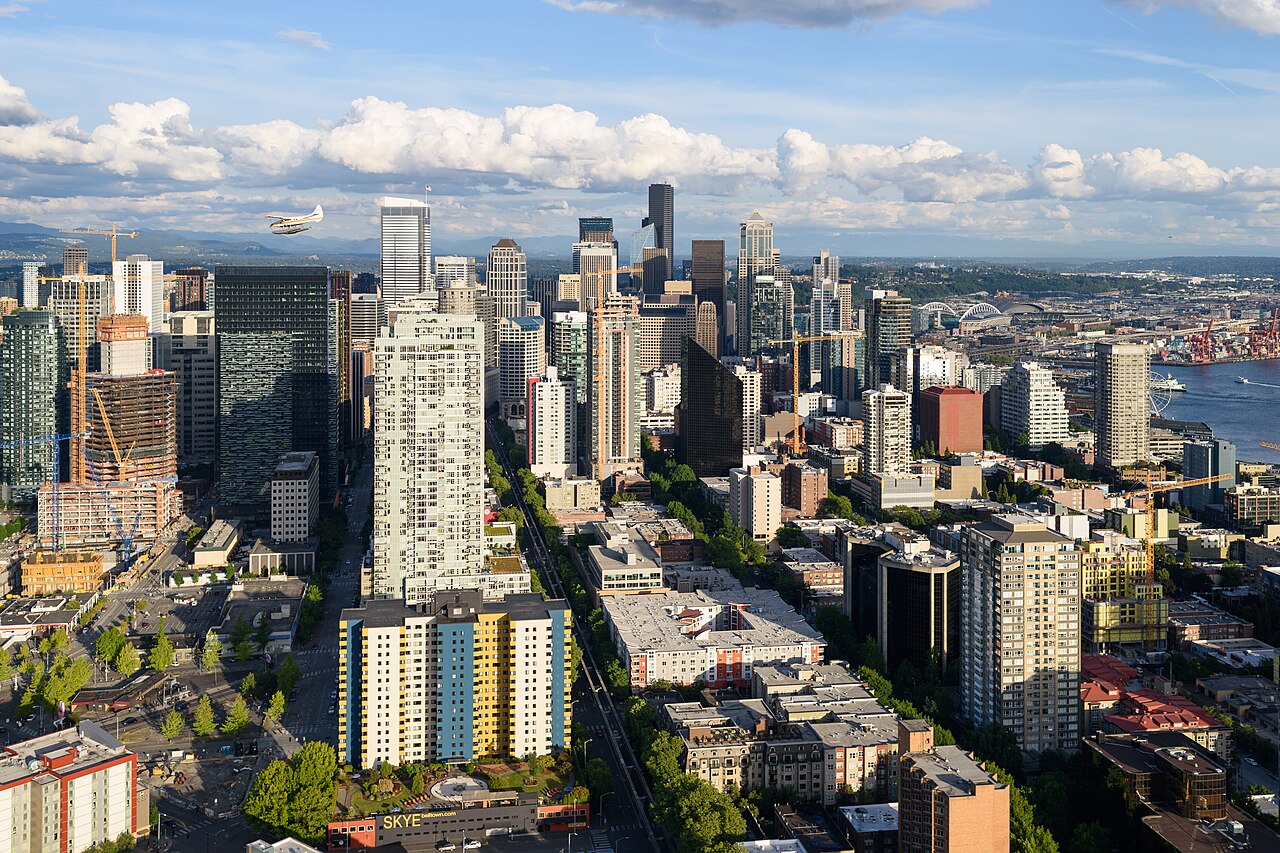
Century 21 Theme and Cold War Context
Seattle pitched the fair as preview of twenty-first-century life, emphasising science, space exploration and nuclear-age optimism. Federal science exhibits aligned with Cold War competition while civic leaders sought economic stimulus after Boeing layoffs.
The Bureau International des Expositions accredited the fair; attendance exceeded expectations, leaving permanent infrastructure unlike many temporary expositions.
Fair president Joseph Gandy and architect Paul Thiry coordinated master planning with private pavilion sponsors.
Space Needle Design and Engineering
Edward E. Carlson's napkin sketch evolved into the 184 m tower by architects Carlson, Graham, Haig & Associates with Victor Steinbrueck contributions. The flying saucer top house used revolving restaurant mechanics novel for 1962.
Foundation piles anchor in glacial soils; wind and seismic design reflect Pacific Northwest engineering standards updated in later renovations including glass floor installations.
Monorail and Transportation Showcase
The Alweg Monorail linked Seattle Center to downtown retail corridors, marketed as future urban transit. It remains operational as heritage transit and tourist attraction.
Fair planners integrated automobile parking structures anticipating suburban visitor patterns that shaped post-war American exposition design.
Related: Seattle Center development after the fair
Pavilions and Corporate Participation
Corporate pavilions — IBM, Ford, Boeing among them — demonstrated technologies from mainframes to aerospace composites. The U.S. Science Pavilion evolved into Pacific Science Center with arched Gothic-modern concrete forms.
Performing arts programming at the Playhouse and Coliseum established cultural tenants continuing today as KeyArena successor climate pledge arena and Seattle Rep adjacent venues.
Explore: Seattle Center institutions
Legacy and Heritage Interpretation
Municipal heritage markers and MOHAI archives document fair planning, protest contexts and urban renewal impacts on surrounding neighbourhoods. Oral histories capture worker and visitor memories for education programmes.
- Archives: Seattle Municipal Archives fair collections
- Tours: Space Needle and Seattle Center walking routes
- Events: Anniversary programming and Bumbershoot festival roots