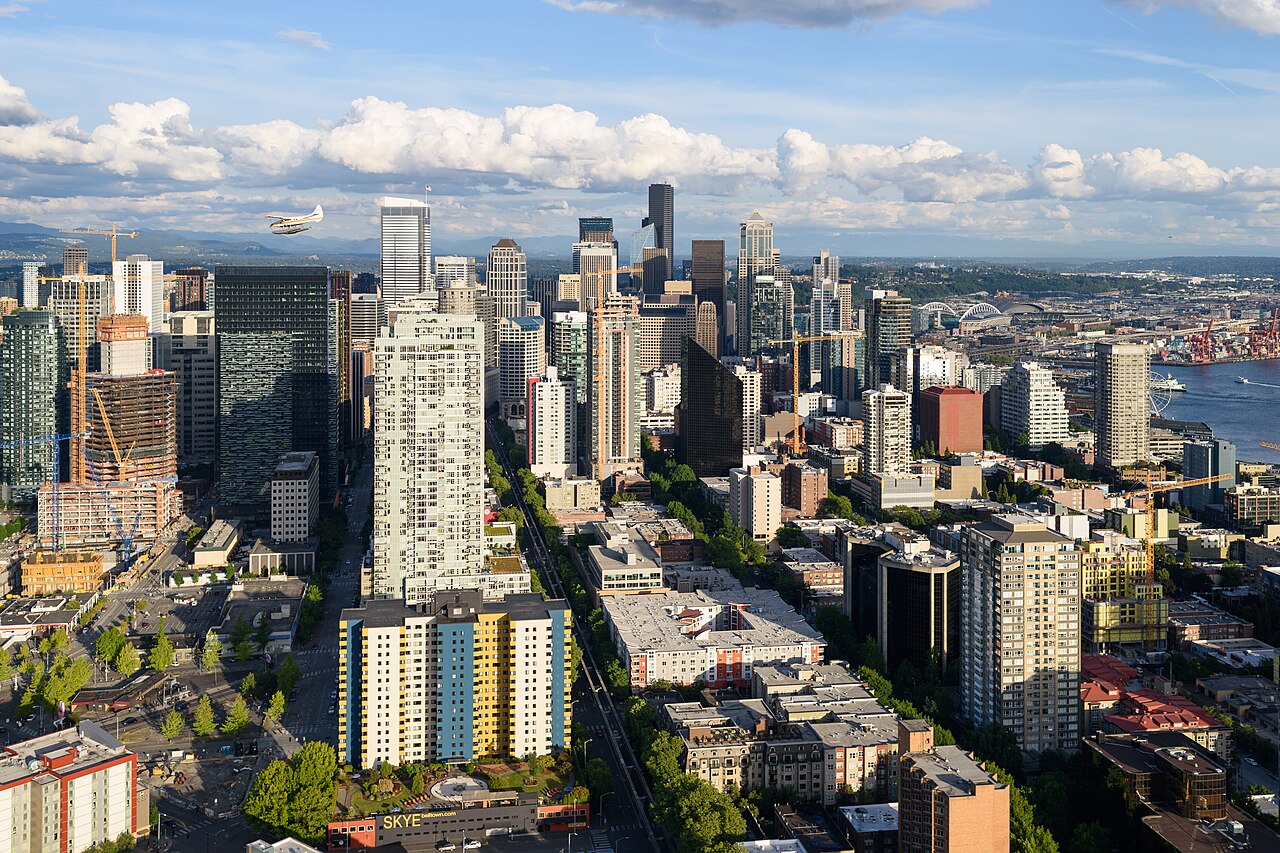
Early High-Rise Era
Smith Tower (1914) symbolised Pacific commerce with ornate terra-cotta crown visible from Elliott Bay. Pre-war towers clustered downtown on regraded hills formerly removed in Denny Regrade projects.
Height limits responded to fire safety and elevator technology advances; banking wealth funded ornate lobby interiors preserved in landmark conversions.
Smith Tower observation deck reopened for public views after restoration campaigns.
Boom Cycles and Columbia Center
1980s Columbia Center surpassed prior height records, triggering view corridor debates. Boeing and tech cycles drove office construction in Denny Regrade and Belltown converting auto-oriented blocks to towers.
Glass curtain wall towers from 2000s condo boom reshaped South Lake Union edges visible from Space Needle observation decks.
View Corridors and Zoning
Municipal view protection guidelines limit heights in select corridors toward Olympic Mountains and Puget Sound. Design review emphasises tower stepbacks and street-level activation.
Related: Modern tower design influences
Waterfront Viaduct Removal
Alaskan Way Viaduct demolition opened Elliott Bay waterfront to park and promenade development. Tunnel replacement shifted traffic underground, enabling public space reconnecting downtown to piers.
Skyline photography points shifted as harbour perspectives cleared of elevated highway structure.
Explore: Puget Sound geography and waterfront
Future Skyline Projections
Comprehensive plan updates evaluate capacity in urban villages balancing housing targets with shadow studies. Supertall proposals periodically test political appetite for height beyond current clusters.
- Viewpoints: Kerry Park, Space Needle, Hamilton Viewpoint
- History: MOHAI exhibits on regrade and fair eras
- Guides: Seattle Architecture Foundation tours